 8839075805
Implements Phases 1-8 of the TFTSR implementation plan.

Rust backend (Tauri 2.x, src-tauri/):
- Multi-provider AI: OpenAI-compatible, Anthropic, Gemini, Mistral, Ollama
- PII detection engine: 11 regex patterns with overlap resolution
- SQLCipher AES-256 encrypted database with 10 versioned migrations
- 28 Tauri IPC commands for triage, analysis, document, and system ops
- Ollama: hardware probe, model recommendations, pull/delete with events
- RCA and blameless post-mortem Markdown document generators
- PDF export via printpdf
- Audit log: SHA-256 hash of every external data send
- Integration stubs for Confluence, ServiceNow, Azure DevOps (v0.2)

Frontend (React 18 + TypeScript + Vite, src/):
- 9 pages: full triage workflow NewIssue→LogUpload→Triage→Resolution→RCA→Postmortem→History+Settings
- 7 components: ChatWindow, TriageProgress, PiiDiffViewer, DocEditor, HardwareReport, ModelSelector, UI primitives
- 3 Zustand stores: session, settings (persisted), history
- Type-safe tauriCommands.ts matching Rust backend types exactly
- 8 IT domain system prompts (Linux, Windows, Network, K8s, DB, Virt, HW, Obs)

DevOps:
- .woodpecker/test.yml: rustfmt, clippy, cargo test, tsc, vitest on every push
- .woodpecker/release.yml: linux/amd64 + linux/arm64 builds, Gogs release upload

Verified:
- cargo check: zero errors
- tsc --noEmit: zero errors
- vitest run: 13/13 unit tests passing

Co-Authored-By: Claude Sonnet 4.6 (1M context) <noreply@anthropic.com>
3.7 KiB
3.7 KiB
@inquirer/expand
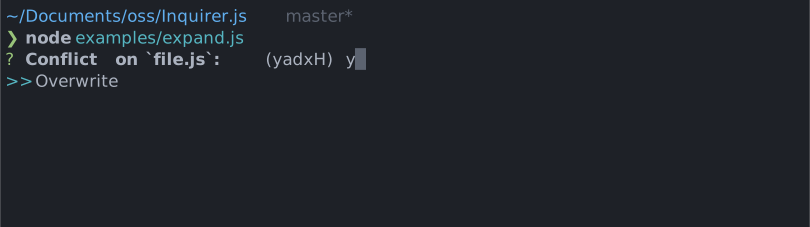
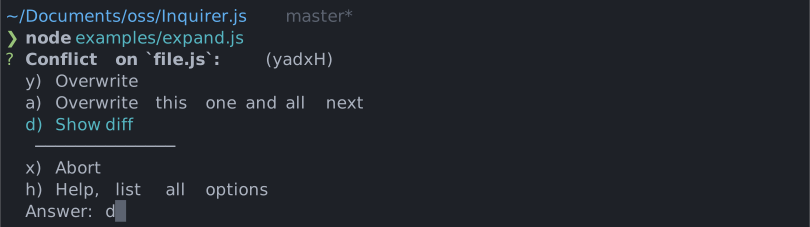
Compact single select prompt. Every option is assigned a shortcut key, and selecting h will expand all the choices and their descriptions.
Installation
| npm | yarn |
|---|---|
|
|
| Or | |
|
|
Usage
import { expand } from '@inquirer/prompts';
// Or
// import expand from '@inquirer/expand';

const answer = await expand({
  message: 'Conflict on file.js',
  default: 'y',
  choices: [
    {
      key: 'y',
      name: 'Overwrite',
      value: 'overwrite',
    },
    {
      key: 'a',
      name: 'Overwrite this one and all next',
      value: 'overwrite_all',
    },
    {
      key: 'd',
      name: 'Show diff',
      value: 'diff',
    },
    {
      key: 'x',
      name: 'Abort',
      value: 'abort',
    },
  ],
});
Options
| Property | Type | Required | Description |
|---|---|---|---|
| message | string |
yes | The question to ask |
| choices | Choice[] |
yes | Array of the different allowed choices. The h/help option is always provided by default |
| default | string |
no | Default choices to be selected. (value must be one of the choices key) |
| expanded | boolean |
no | Expand the choices by default |
| theme | See Theming | no | Customize look of the prompt. |
Separator objects can be used in the choices array to render non-selectable lines in the choice list. By default it'll render a line, but you can provide the text as argument (new Separator('-- Dependencies --')). This option is often used to add labels to groups within long list of options.
Choice object
The Choice object is typed as
type Choice<Value> = {
  value: Value;
  name?: string;
  key: string;
};
Here's each property:
value: The value is what will be returned byawait expand().name: The string displayed in the choice list. It'll default to the stringifyvalue.key: The input the use must provide to select the choice. Must be a lowercase single alpha-numeric character string.
Theming
You can theme a prompt by passing a theme object option. The theme object only need to includes the keys you wish to modify, we'll fallback on the defaults for the rest.
type Theme = {
  prefix: string | { idle: string; done: string };
  spinner: {
    interval: number;
    frames: string[];
  };
  style: {
    answer: (text: string) => string;
    message: (text: string, status: 'idle' | 'done' | 'loading') => string;
    error: (text: string) => string;
    defaultAnswer: (text: string) => string;
    highlight: (text: string) => string;
  };
};
License
Copyright (c) 2023 Simon Boudrias (twitter: @vaxilart)
Licensed under the MIT license.